Blog · Compliance & Cost
The cheapest kilowatt-hour is the one you never buy.
The cheapest kilowatt-hour is the one you never buy. How care, hotel, hospitality and forecourt operators find and cut avoidable energy consumption

Alistair Yates
Published: 2 November 2026 · 1 min read
The cheapest kilowatt-hour is the one you never buy.
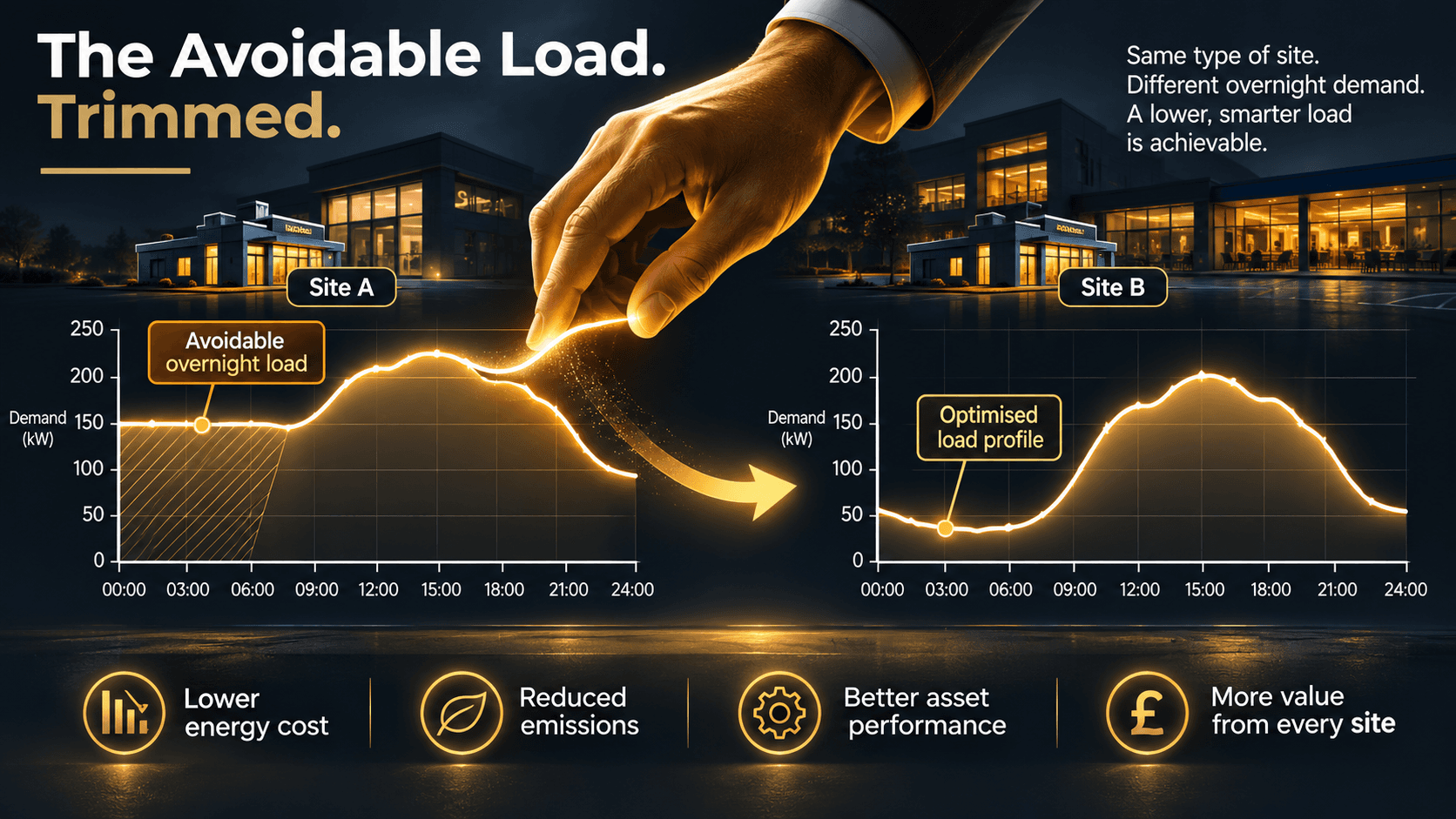
Most estates negotiate the price of energy and never question the quantity. But your bill is price multiplied by consumption, and for a site that runs all day, a lot of that consumption is avoidable.
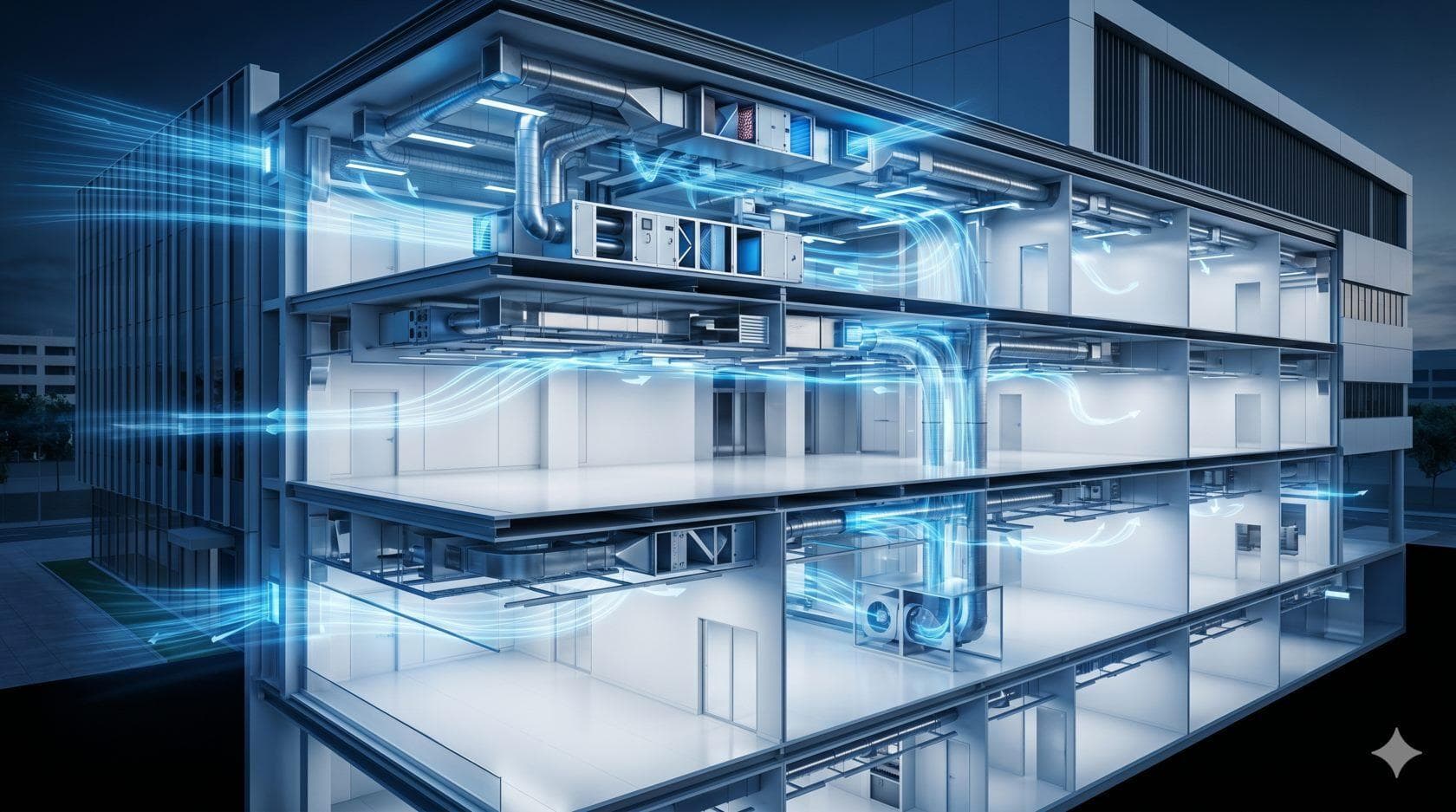
Refrigeration cycling in empty kitchens. Heating on a schedule in unused rooms. Canopy lighting at full power at 3am. Hot-water plant holding temperature after the laundry has finished. Compare half-hourly data across similar sites and the outliers show themselves.
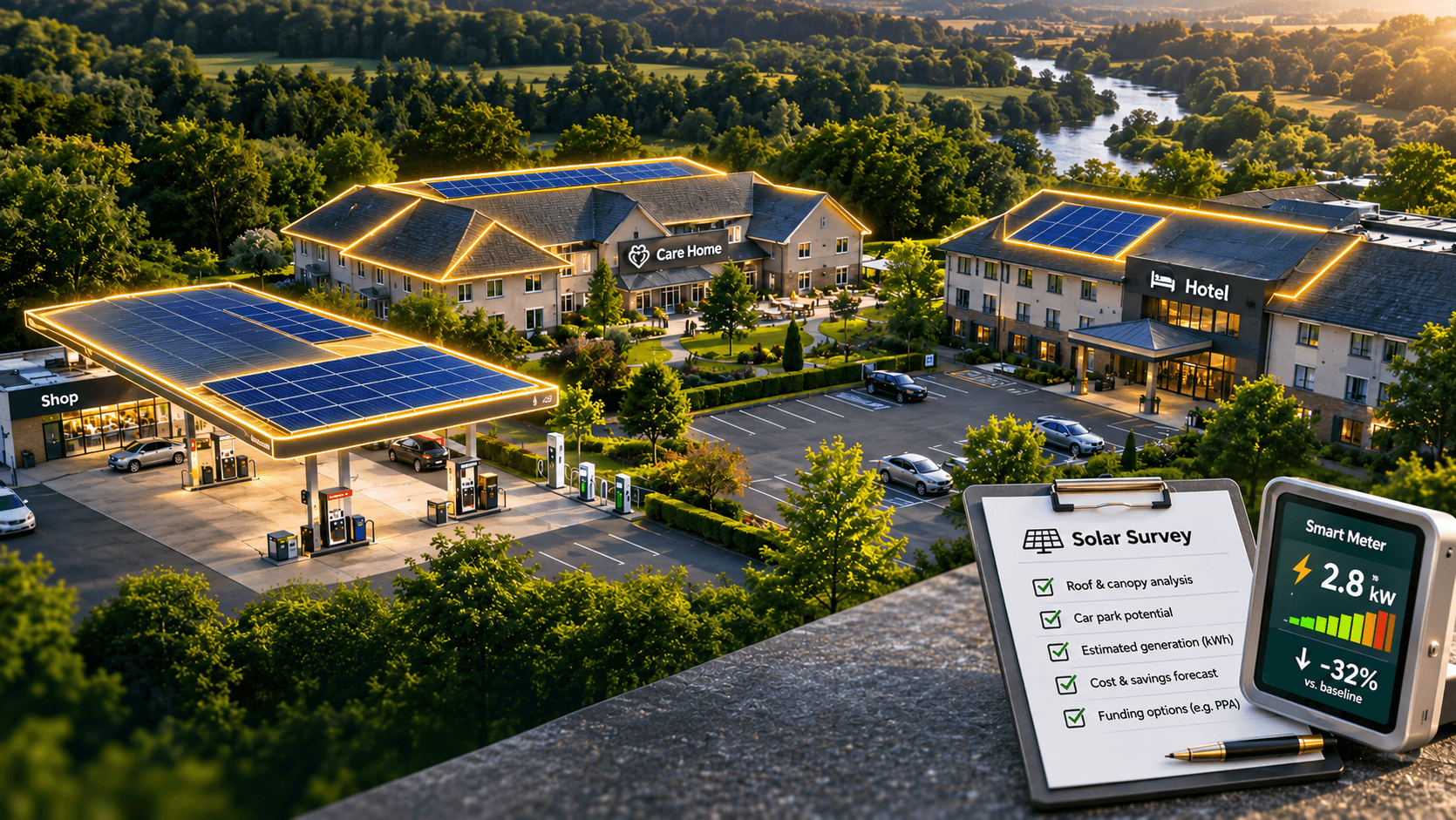
Reducing consumption comes first for another reason: it shrinks everything that follows. A smaller load means a smaller solar array, a smaller battery and a smaller connection upgrade, and a lower bill whatever the unit price.
What the Portal Does
● Half-hourly consumption compared across the estate, so out-of-hours load stands out
● Avoidable demand identified in controls, scheduling, lighting and refrigeration
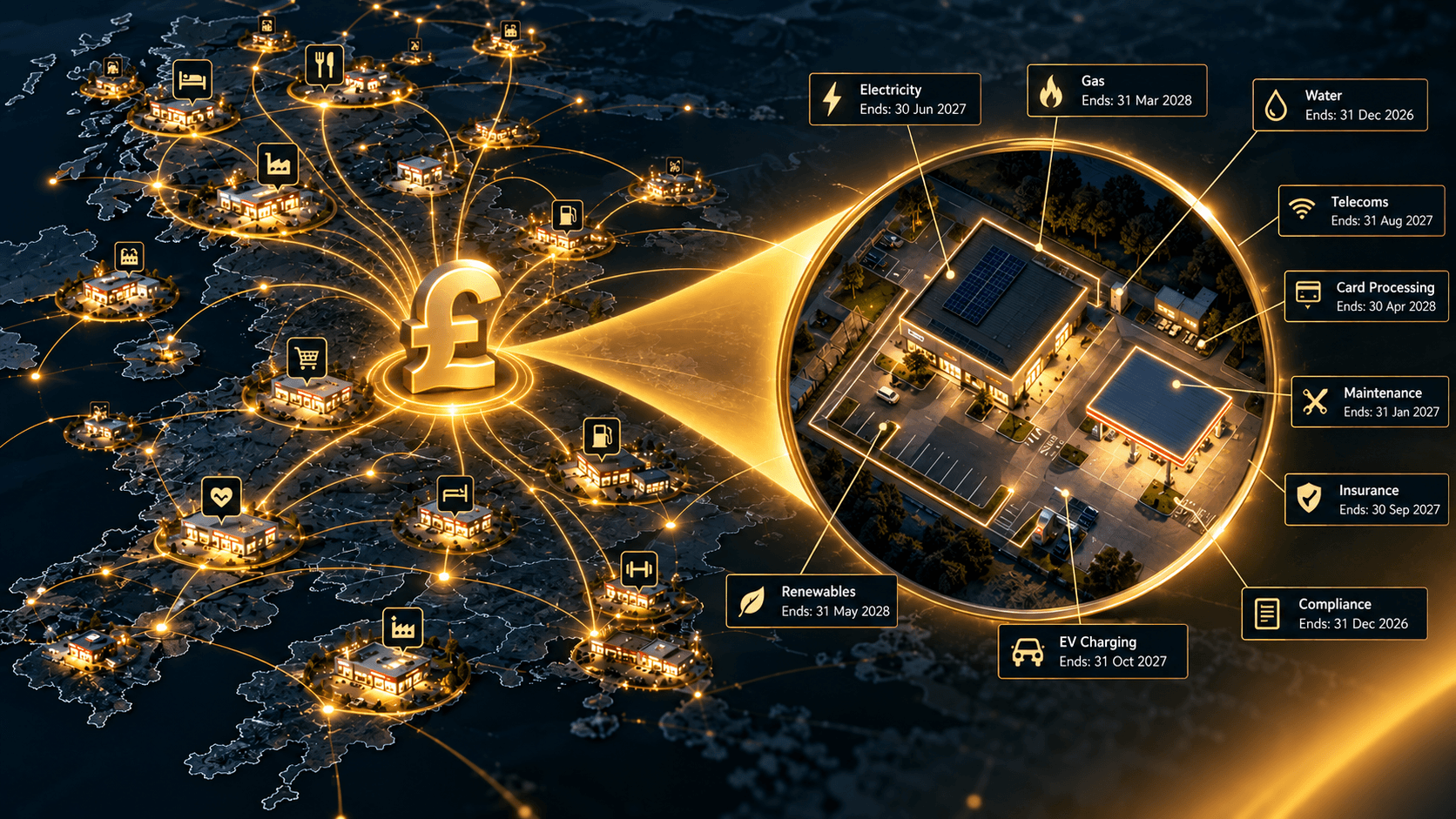
● Reduced load reflected in the energy contract, not in last year's volumes
● Technology sized afterwards, to the load that is left
The Cost of Getting This Wrong
● Care homes: heating held at full tilt in unoccupied areas because nobody sees demand wing by wing
● Hotels: plant and laundry load running overnight at near-peak levels
● Forecourts: signage and chillers at full power through the quietest hours of the night
Book a Free Audit — see what each of your sites consumes, pays and could earn.
Follow AP Prokure for weekly multi-site compliance and cost insight, and subscribe to our newsletter.
Talk to us: consult@approkure.com | savemore.approkure.com